
Why You Should Not Combine Snorkeling & Scuba Diving On The Same Boat – Same Itinerary
Combining snorkeling and scuba diving in one trip is generally not recommended by OnBird due to the great difference in itinerary and diving or snorkeling site. We provide inside view for guests to have better understanding about these two experiences.
Many guests express surprise upon discovering that they can observe a greater variety of corals in shallow waters compared to deep waters. Initially, they believed that scuba diving would be more enjoyable than snorkeling, perceiving snorkeling merely as floating on the surface with limited visibility. However, after reviewing OnBird’s comprehensive explanation, they learned that snorkeling actually offers superior opportunities to view corals and reef fish. Additionally, they gained insights into why combining snorkeling and scuba diving may not be advisable.
OnBird’s Exclusive Open Water Safety Management For Discovery Snorkeling
Shallow Waters Are Amazing Than You Think?
Shallow waters in open environments are often perceived by the general public as areas with only 1-2 meters of water, featuring limited fish, sandy substrates, and minimal marine life. However, this perception is misleading. Coral reefs thrive in these shallow zones, benefiting significantly from their exposure to sunlight, which provides approximately 70% of the nutrients necessary for coral growth. In fact, the shallow waters ranging from 0.5 to 4 meters deep encompass the largest expanse of coral reefs.
Deep Waters Are Darken and Lesser Things Than You Think
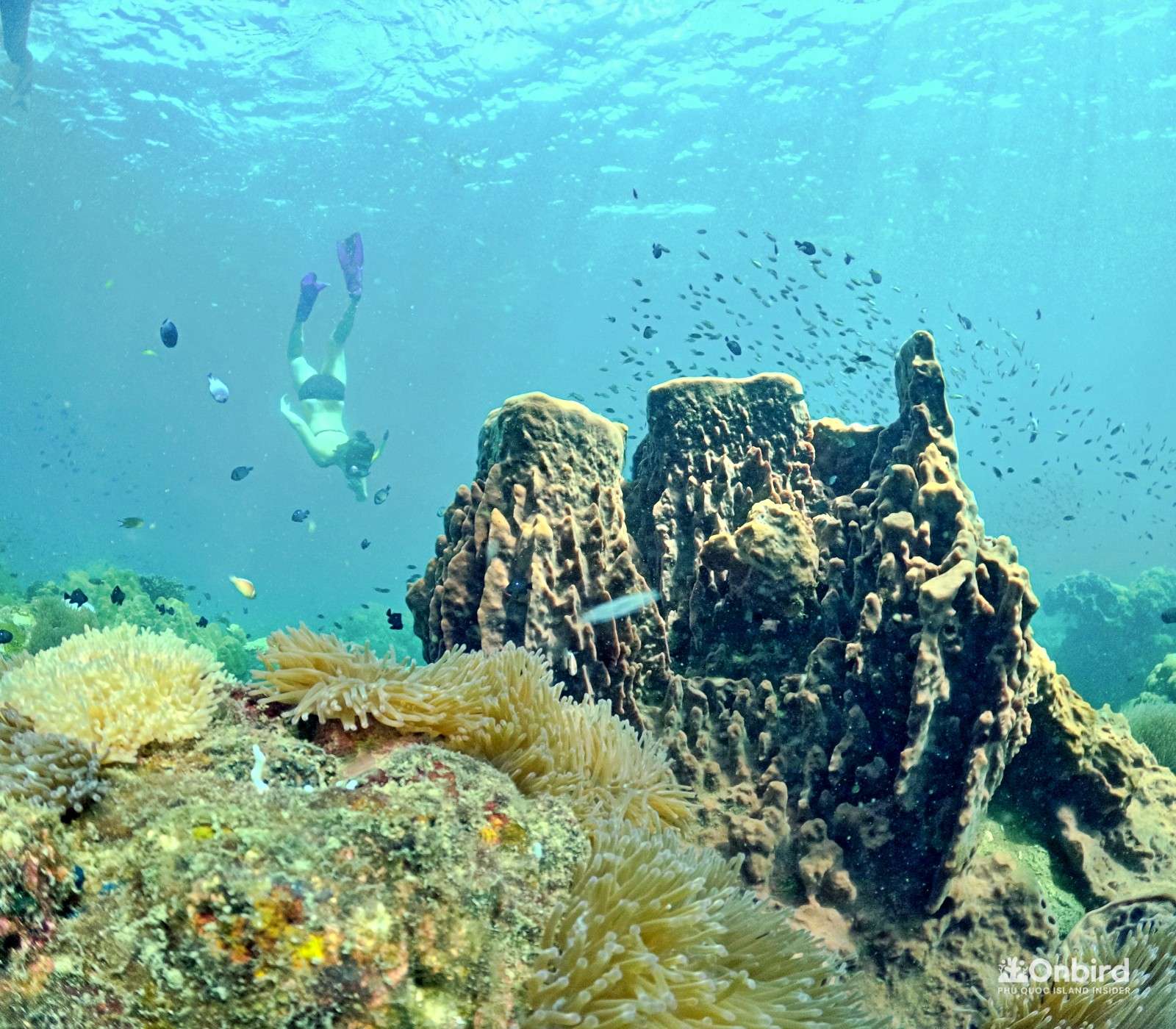
The photo is captured in 3-meter depth by OnBird Phu Quoc.
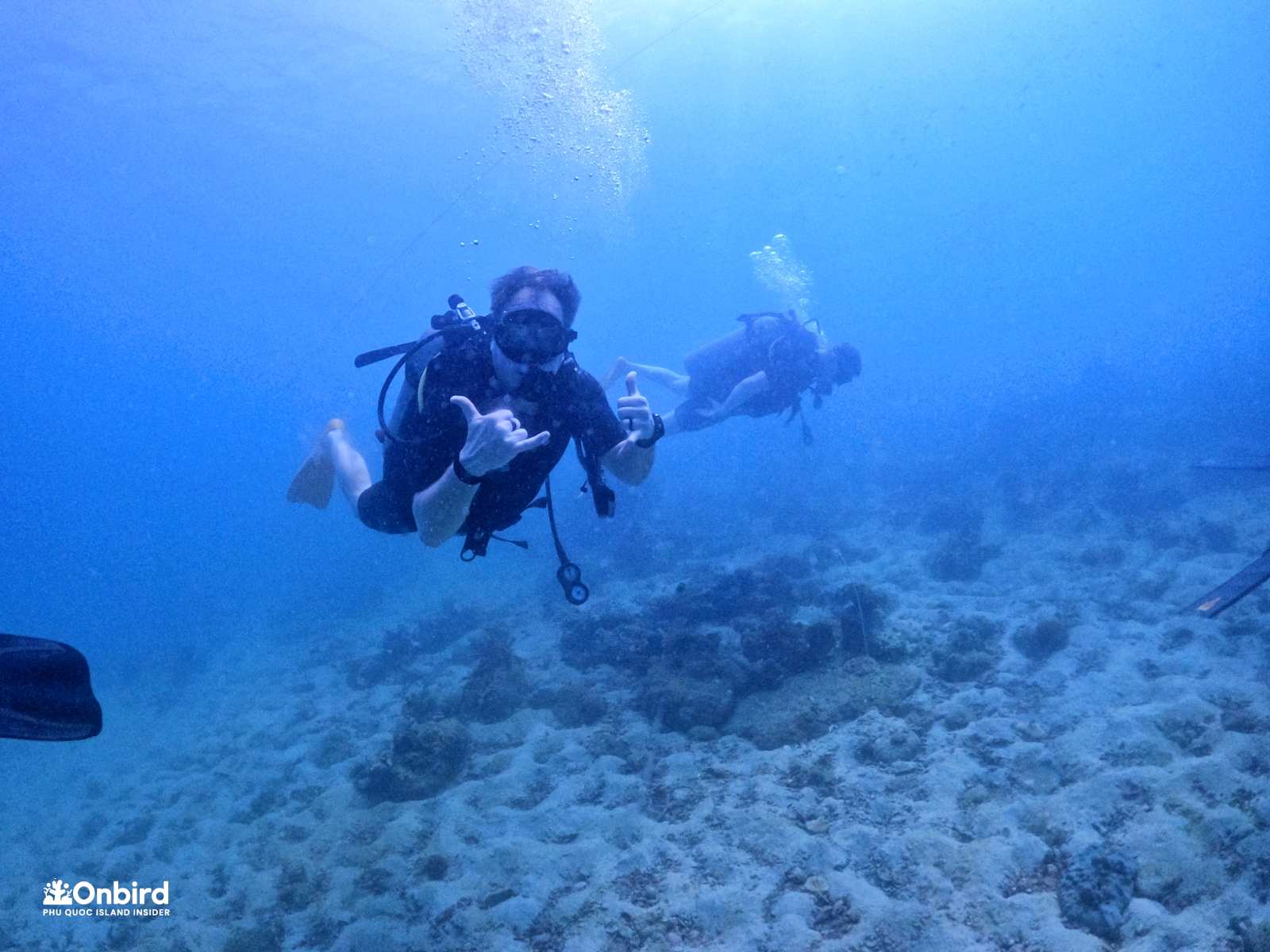
At a depth range of 10 to 18 meters, the seabed is characterized by a reduced presence of corals and reef fish.
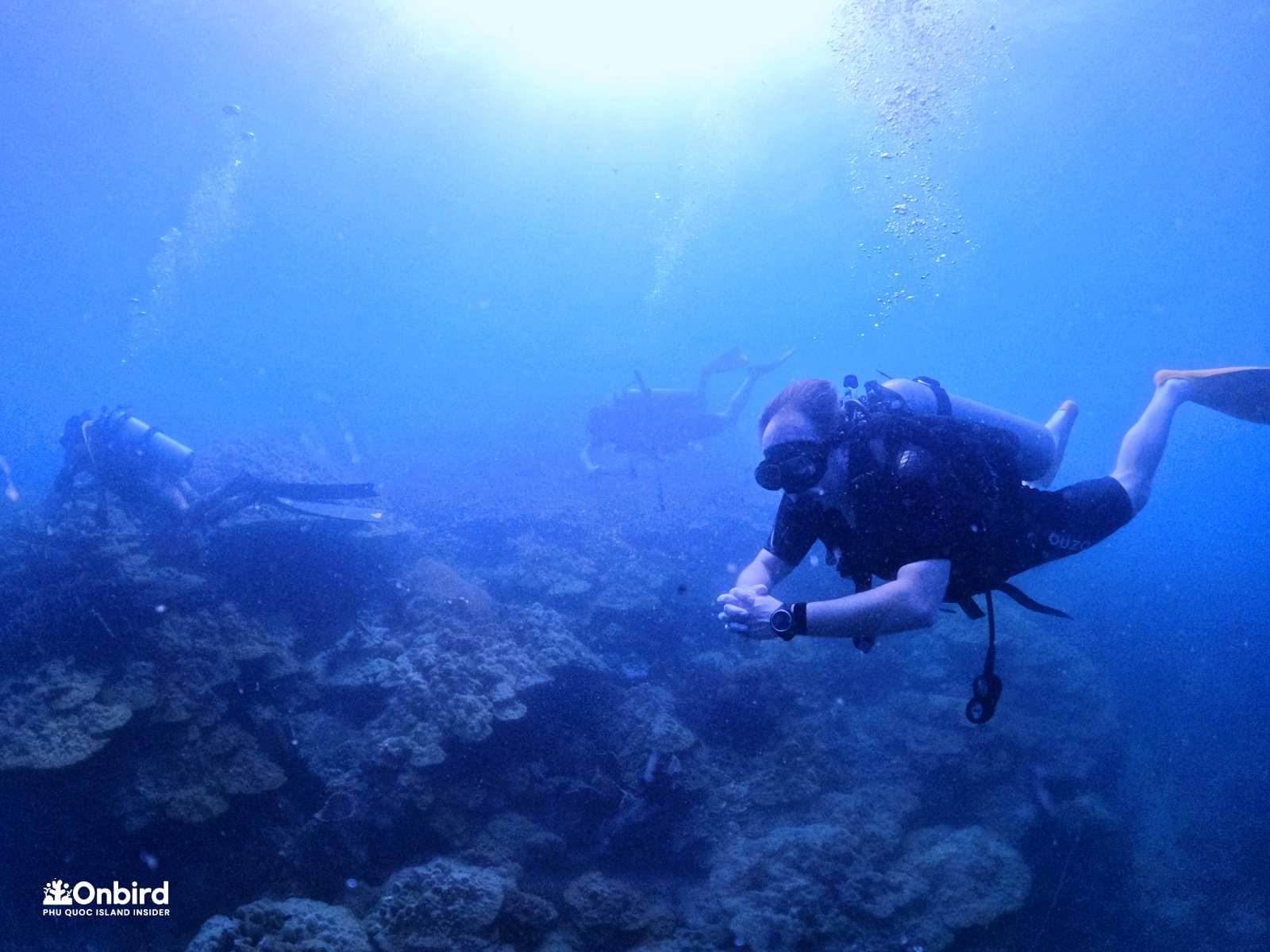
Everything turns blue as you go deep – OnBird Phu Quoc
Scuba Diving And Snorkeling Site Are Entirely Different
The approaches to scuba diving sites and snorkeling sites are entirely different, thereby it is always better to separate these two experiences. As the invention of scuba diving is to enable people to explore deep water but not shallow water thereby it’s purpose is to explore seabed and deep water marine life but not abundance of corals. Scuba diving sites are deep water areas or deep water rocks but not shallow water which prevent them from descending down.
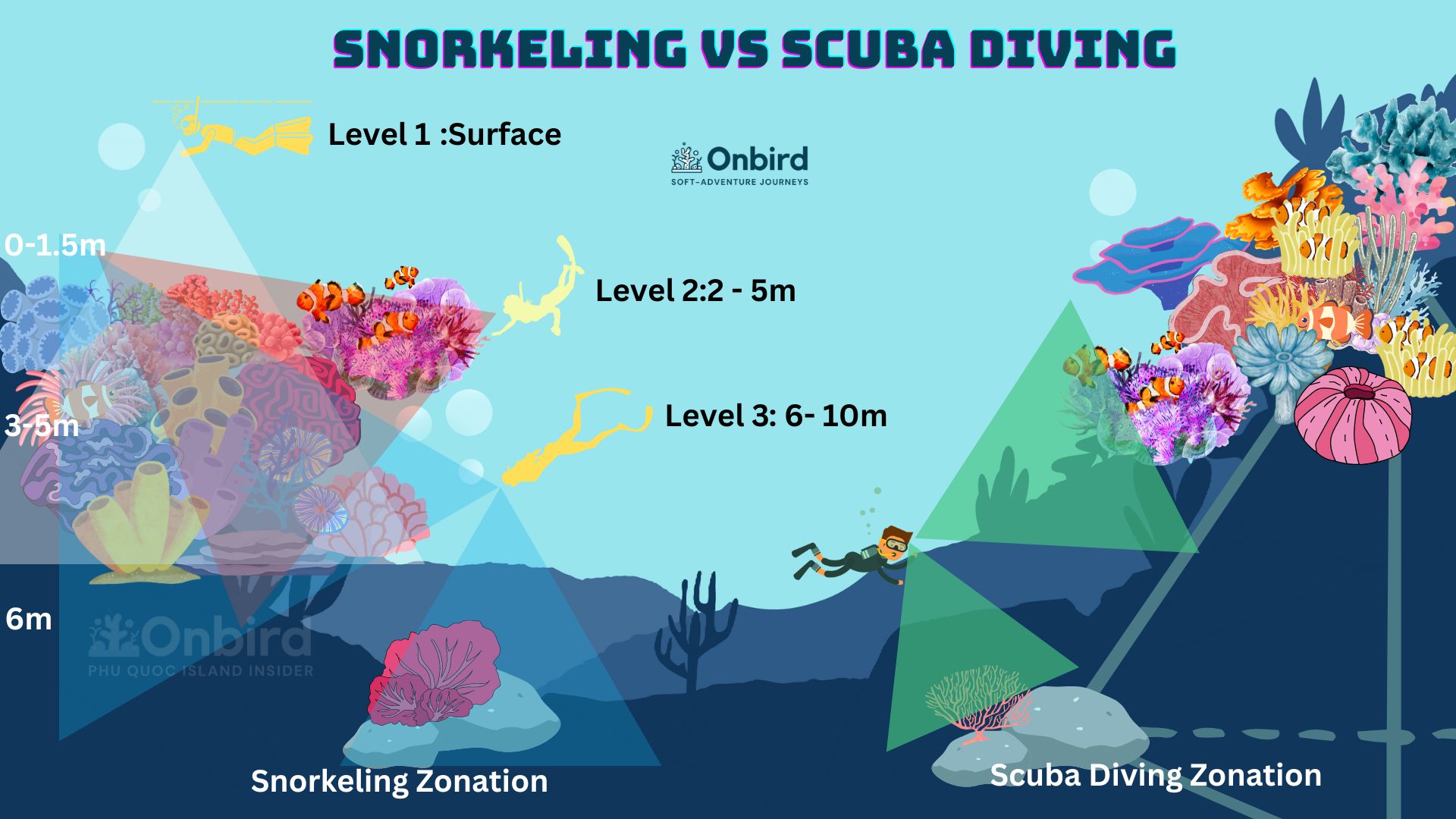
Scuba divers favor seabeds that are situated farther from the reef slope, where snorkelers typically encounter fewer corals.
- Distinct Objectives: The aims of scuba diving and snorkeling differ significantly; scuba diving focuses on exploring deeper underwater ecosystems, while snorkeling is designed for observing coral reefs and shallow reef fish.
- Optimal Conditions for Snorkeling: Shallow waters (1-10 meters) typically provide a richer diversity of corals and fish, making them ideal for snorkeling, yet less suitable for scuba diving.
- Site Discrepancies: Scuba diving locations often differ from snorkeling sites. Utilizing the same site for both activities could lead to an imbalance in the experiences offered.
